Family-owned, licensed & insured. Free in-home estimates in Arlington and nearby cities. Call (817) 555-0123

Fix it before you replace it

Floor Repair in Arlington, TX

Board replacement, cracked tile, LVP plank swaps, squeaks and loose transitions in Arlington homes, with the cause found first so the repair holds.

  • Hardwood board cut-outs and weave-ins
  • Cracked tile removed and replaced
  • Single LVP and laminate plank swaps
  • Free in-home assessment and written quote

Family-owned · Licensed & insured, Lic. #238190 · Financing available

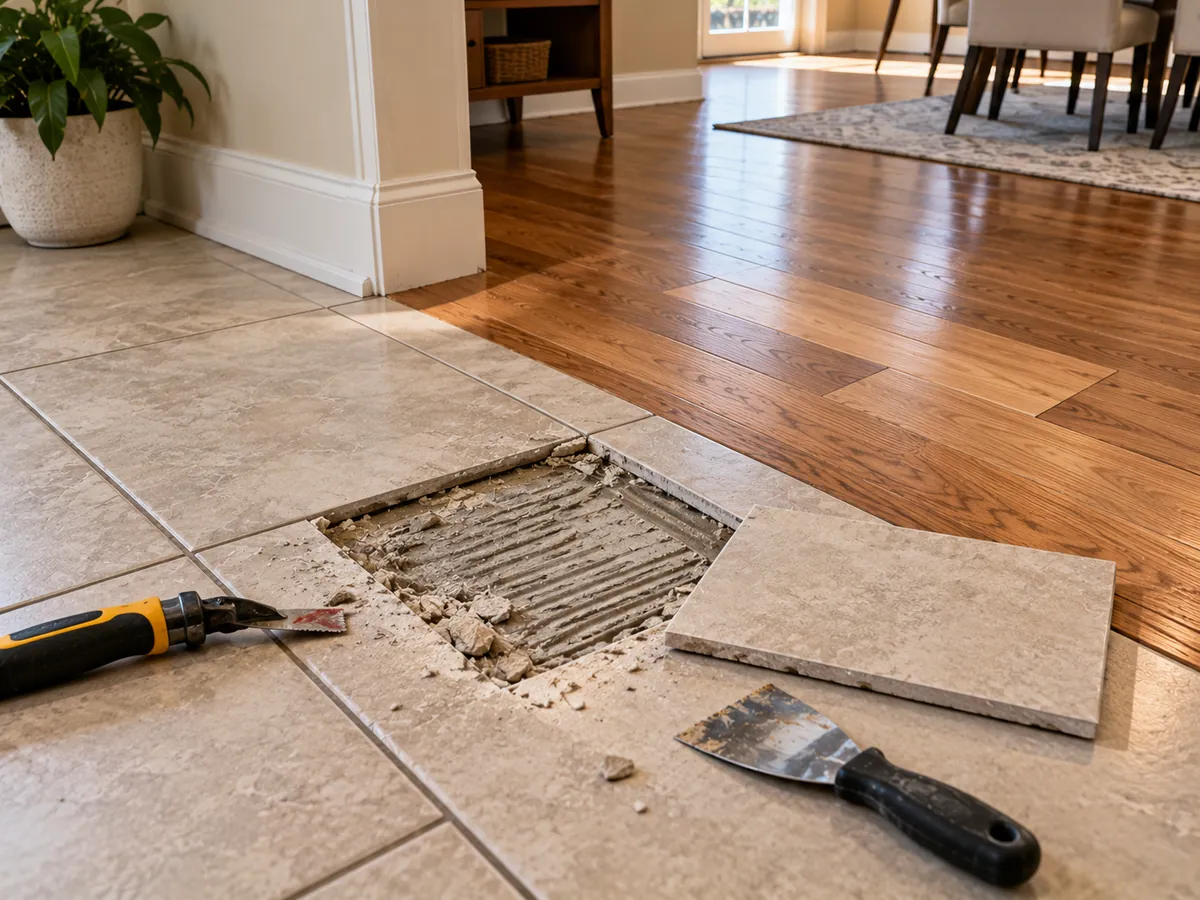
Cracked porcelain tile being replaced during a floor repair in an Arlington, TX kitchen

Floor repair in Arlington, TX usually starts with a small problem that is hard to ignore: one cracked tile in the kitchen, a few stained boards in the hall, an LVP plank with a chipped edge or a squeak at the top of the stairs. Most of these can be fixed without replacing the whole floor, as long as the repair deals with why the damage happened.

That second part matters here. Shifting clay soil, slab leaks and plumbing failures are behind a lot of cracked tile and gapped wood in North Texas, and a patch laid over an active problem tends to crack or lift again. We look for the cause first, tell you plainly whether repair or replacement is the better value, and keep the repair to the smallest area that will hold up.

What's Included in a Floor Repair

  • Diagnosis. We check the damaged spot and the floor around it for hollow areas, moisture and slab cracks, and explain what caused the damage.
  • Material matching. We start with any spare boxes you have, then source the closest match by species, width, color or product line.
  • Careful removal of only the damaged pieces, cutting out boards or grinding out grout without disturbing the floor around them.
  • Base repair under the damaged area, such as filling a low spot or refastening loose plywood.
  • Replacement pieces nailed, glued, set in thinset or clicked in to match the original installation.
  • Blending, whether that means matching grout color, staining and finishing new boards, or trimming a transition to sit flush.
  • Dust control when cutting tile or concrete, as OSHA's construction silica rule requires.
  • Cleanup, plus notes on any underlying issue worth watching.

Signs Your Floor Needs Repair

  • Cracked tiles, especially a crack that runs in a line through several tiles, which often points to a crack in the slab below.
  • Hollow-sounding tile when tapped, a sign the thinset has lost its bond.
  • Gaps opening between boards or planks, or end joints pulling apart.
  • Peaking LVP, where planks push up against each other along a seam.
  • Squeaks and soft spots on a second floor or in a pier-and-beam home.
  • Loose or lifted transitions at doorways that catch toes and vacuum heads.
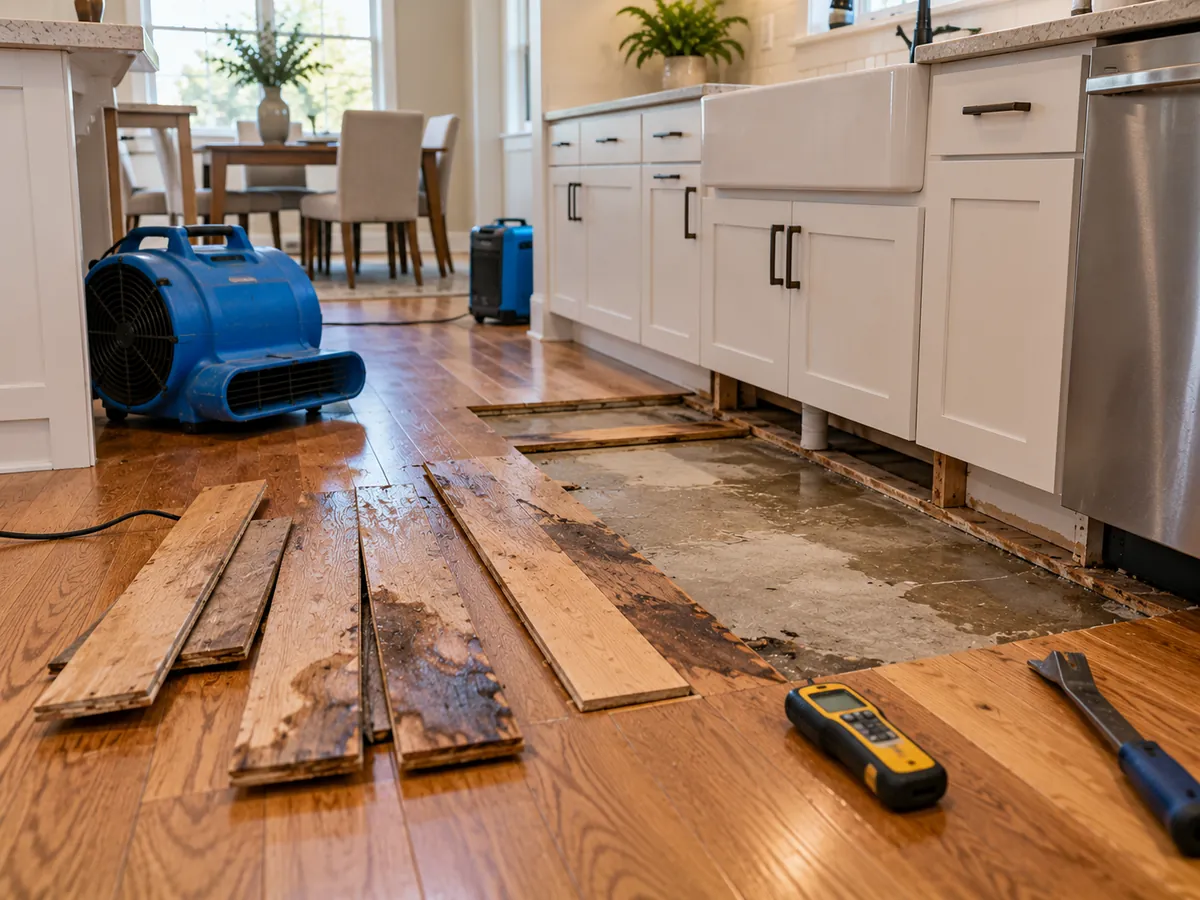
  • Stained or cupped boards near sinks, dishwashers, refrigerators or exterior doors.

If water is still present or the damage covers most of a room, a repair may not be the right fix; our water-damaged floor replacement page explains that process.

How We Handle Floor Repairs in Arlington

  1. Find the cause. We look for slab cracks, moisture, missing expansion space, loose subfloor or failed bond before quoting anything.
  2. Decide repair or replace. If the cause is fixed or stable and matching material exists, we repair. If not, we say so and lay out the options.
  3. Remove the damaged pieces. Hardwood boards are cut down the middle and lifted out in pieces to protect their neighbors; grout is ground out before a tile comes up; LVP is unlocked from the nearest wall or cut out.
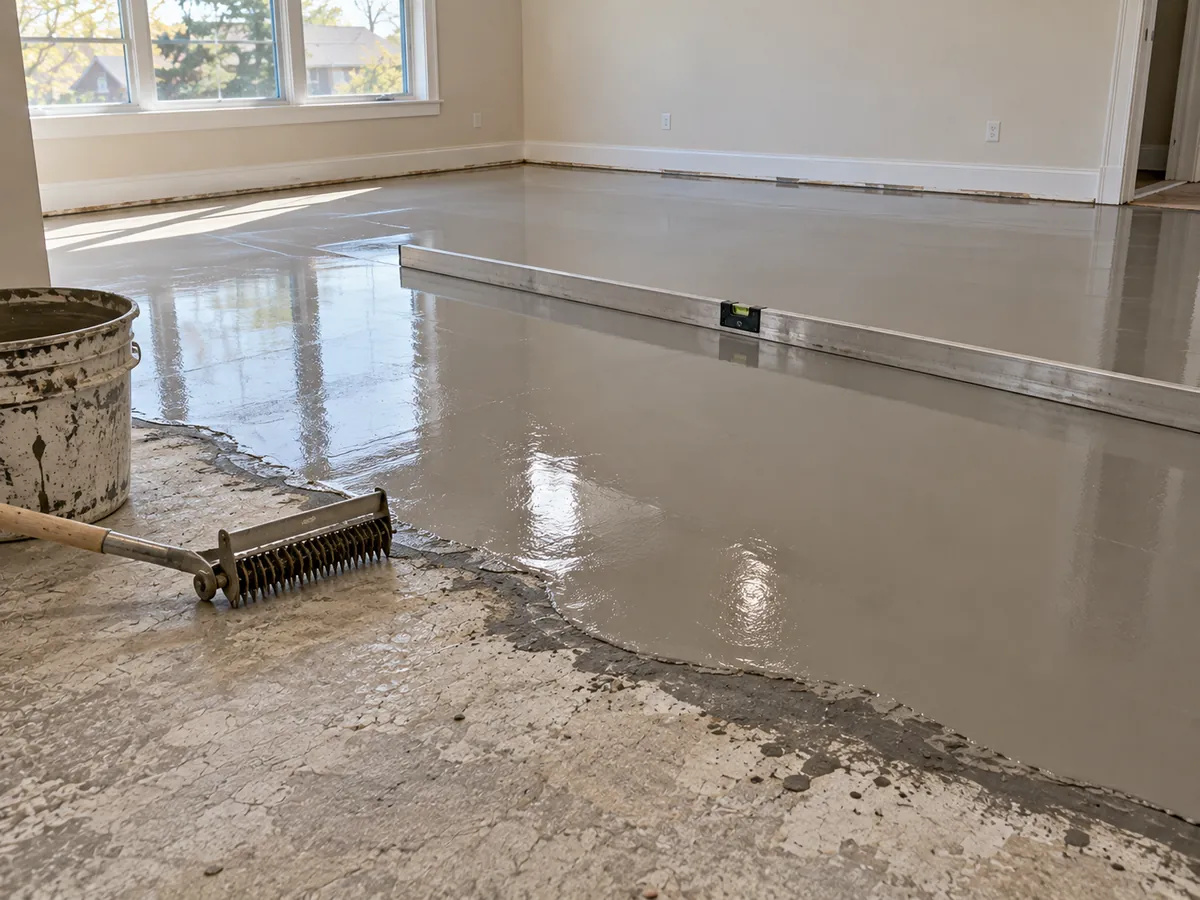
  4. Fix the base. Old adhesive or thinset is cleaned off and low spots are filled so the new piece sits level with the floor around it.
  5. Install the new pieces with the original method, whether nailed, glued, set in thinset or clicked together.
  6. Blend and check. Grout, stain, finish or trim is matched, and we walk the repair with you before we leave.

Common Floor Repairs and When to Replace Instead

Repair typeTypical fixWhen replacement makes more sense
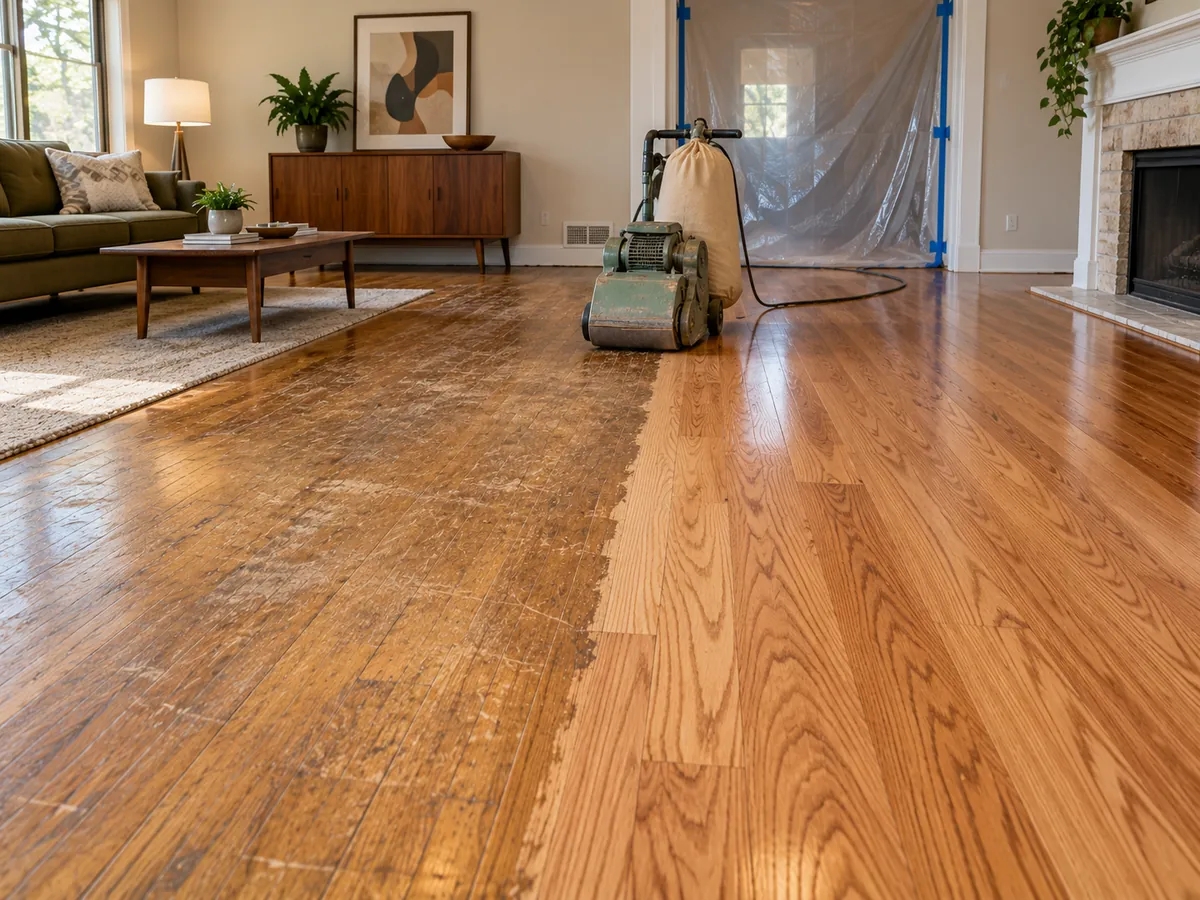
Damaged hardwood boardsCut out and weave in matching boards, then sand and finish to blendDamage spread across a room, or boards already sanded down to the tongue
Cracked or hollow tileGrind out grout, remove the tile, reset with fresh thinset and regroutCracks that keep coming back in a line, many hollow tiles or no matching tile
Chipped or swollen LVP or laminateUnlock and replace the plank, or cut it out and glue in a new oneSwollen laminate across many planks, or a discontinued product
SqueaksScrew loose subfloor to the joists; inject adhesive under hollow spots in glue-down floorsWidespread movement from a failing subfloor or pier-and-beam supports
GapsLeave seasonal gaps alone; fill or relay permanent onesGaps from slab movement that keep widening
Loose or tall transitionsReset, or replace with a reducer, T-molding or threshold sized to the height changeA height difference caused by an uneven subfloor that needs leveling

For transitions, we use the ADA 2010 Standards as a trip-safety benchmark even in homes: a level change up to 1/4 inch can be vertical, and one from 1/4 to 1/2 inch should be beveled no steeper than 1:2. Where a slab crack runs under a wider area of tile, regrouting will not stop it; resetting that area over an uncoupling membrane, as described on our tile flooring installation page, gives the tile room to tolerate minor movement.

What Affects the Cost of a Floor Repair

Repairs are quoted after we see the damage, based on:

  • Size of the damaged area and how many pieces have to come out.
  • Material availability. Spare boxes from the original install save time; tracking down a discontinued product takes more.
  • Flooring type. Site-finished hardwood needs sanding and finish blending, tile needs grout cure time, and click LVP is usually quickest.
  • Location. A plank in the middle of a room or under a cabinet takes more work to reach than one by a wall.
  • Underlying fixes such as subfloor fastening or leveling (see subfloor repair and leveling).
  • Asbestos testing when older vinyl tile or black mastic is involved. The EPA warns against sanding, scraping or breaking suspected material, so it is lab tested before anyone touches it.

If a repair would cost close to what a new floor in that room would, we tell you before you decide.

Why Floors Crack and Gap in Arlington

Arlington's expansive clay loses volume in a dry summer and takes it back after heavy rain, and that movement is a common reason tile cracks in a line or wood floors open up in one corner of a house. Slab leaks add a second problem: water under the floor that loosens adhesive and swells wood from below. If a foundation company is coming to install piers or lift the slab, we recommend holding off on floor repairs until that work is finished, because leveling can crack more tile and shift boards. Once the slab is stable, the repair has a much better chance of lasting.

Why choose us

Why Arlington Homeowners Call Us for Floor Repair

EJ171

TCNA movement joint method

We Fix the Cause, Not Just the Crack

A tile that cracks again a month after it is replaced usually means the cause was never found. We check for slab cracks, hollow spots and missing movement joints. The TCNA Handbook's EJ171 method calls for movement joints at the perimeter and in the field every 20 to 25 feet indoors, and tile laid tight to the walls without them can crack or tent. If the cause is still active, we tell you before replacing anything.

1/4 in.

typical LVP expansion gap at walls

Plank Swaps Without Tearing Up the Room

Most LVP and laminate floors float, so they need room to move. Many makers call for an expansion gap of about 1/4 inch at walls and fixed objects, and planks pinned under cabinets or tight trim are a frequent cause of peaking. When we swap a damaged plank, we also confirm the floor has its gap, then unlock from the nearest wall or cut in a glued replacement so the planks around it stay put.

24 to 48 hrs

EPA window for drying wet materials

Leaks Come Before Patches

Water under a floor keeps doing damage after the visible spot dries. The EPA advises drying wet materials within 24 to 48 hours to prevent mold, so if a leak is fresh we point you to a plumber or water mitigation company first and come back once the area is dry. We check moisture before installing replacement pieces, because new material laid over a wet slab or subfloor fails the same way the old one did.

Free estimate

Get a Free Floor Repair Estimate This Week

One call books your in-home measure, and you get a written, itemized quote after the visit.

(817) 555-0123

Mon to Fri 7 AM to 6 PM · Saturday 8 AM to 2 PM · Financing available

Our job-site standards

What Every Arlington Flooring Job Includes

No surprises on install day. These standards apply to every room we touch, from a single bathroom to a whole house.

  • Moisture readings, written down

    We test concrete slabs and wood subfloors before installation and record the numbers on your job sheet.

  • Flatness checked to spec

    We check the floor with a long straightedge and fix humps and dips to the flooring maker's tolerance.

  • Itemized, written quote

    Material, underlayment, prep, removal, trim and labor are listed line by line, so you can compare bids.

  • Protected home

    Floor protection on walkways, plastic dust barriers where we cut or sand, and doorways kept clear.

  • Clean job site daily

    Debris hauled out, tools stacked, and rooms left usable at the end of each workday.

  • Final walkthrough

    We walk every room with you, fix anything you flag, and leave labeled spare boards or tile for future repairs.

FAQ

Floor Repair FAQ

Can you replace just one cracked tile?

Usually, if you have a spare or we can find a match. We grind out the grout around the tile, break it out carefully so its neighbors are not damaged, clean off the old thinset, set a new tile and regrout. If several tiles crack in a line, the slab underneath is likely moving, and that needs a look first.

Should I repair my floors before or after foundation repair?

After. Foundation work such as installing piers or lifting a slab can crack tile, open gaps and change the level of the floor. Repairing first risks paying twice. Once the foundation company has finished, we can assess what the movement left behind and handle the repairs in one visit.

What causes squeaky floors?

Most squeaks come from movement. On a second floor or in a pier-and-beam home, loose subfloor rubbing on nails or joists is the usual cause, and screwing the subfloor down fixes it. On a slab, a squeak in a floating or glue-down floor usually points to a low spot or lost adhesive bond under the boards.

Can you match my old hardwood?

Often, yes. Common species like red and white oak in standard widths are still easy to find, and site-finished floors can be stained to blend. Prefinished and engineered products are harder because colors and textures get discontinued. Spare boards from the original install are the best match, so check the garage or attic before we visit.

Is it worth repairing LVP, or should I replace it?

Repair is worth it when the damage is limited to a few planks and you have spares or the product is still sold. Replacement makes more sense when planks are peaking across a room, the floor went in without expansion space, or water got under a large area. Laminate with a swollen core will not dry back flat.

Ready to Start Your Floor Repair Project?

Call for a free in-home estimate. We measure, test the subfloor and leave you a written quote.

Call (817) 555-0123

Mon to Fri 7 AM to 6 PM · Saturday 8 AM to 2 PM · Licensed & insured, Lic. #238190

Call Now Free Estimate
(817) 555-0123