Family-owned, licensed & insured. Free in-home estimates in Arlington and nearby cities. Call (817) 555-0123

Sand, stain and recoat

Hardwood Floor Refinishing in Arlington, TX

Full sanding or a screen and recoat for worn oak and other hardwood floors in Arlington, with dust control, stain samples on your own boards and a finish picked for how you live.

  • Full sand and refinish or screen and recoat
  • Dust control during sanding
  • Stain samples on your own floor
  • Free in-home assessment and written quote

Family-owned · Licensed & insured, Lic. #238190 · Financing available

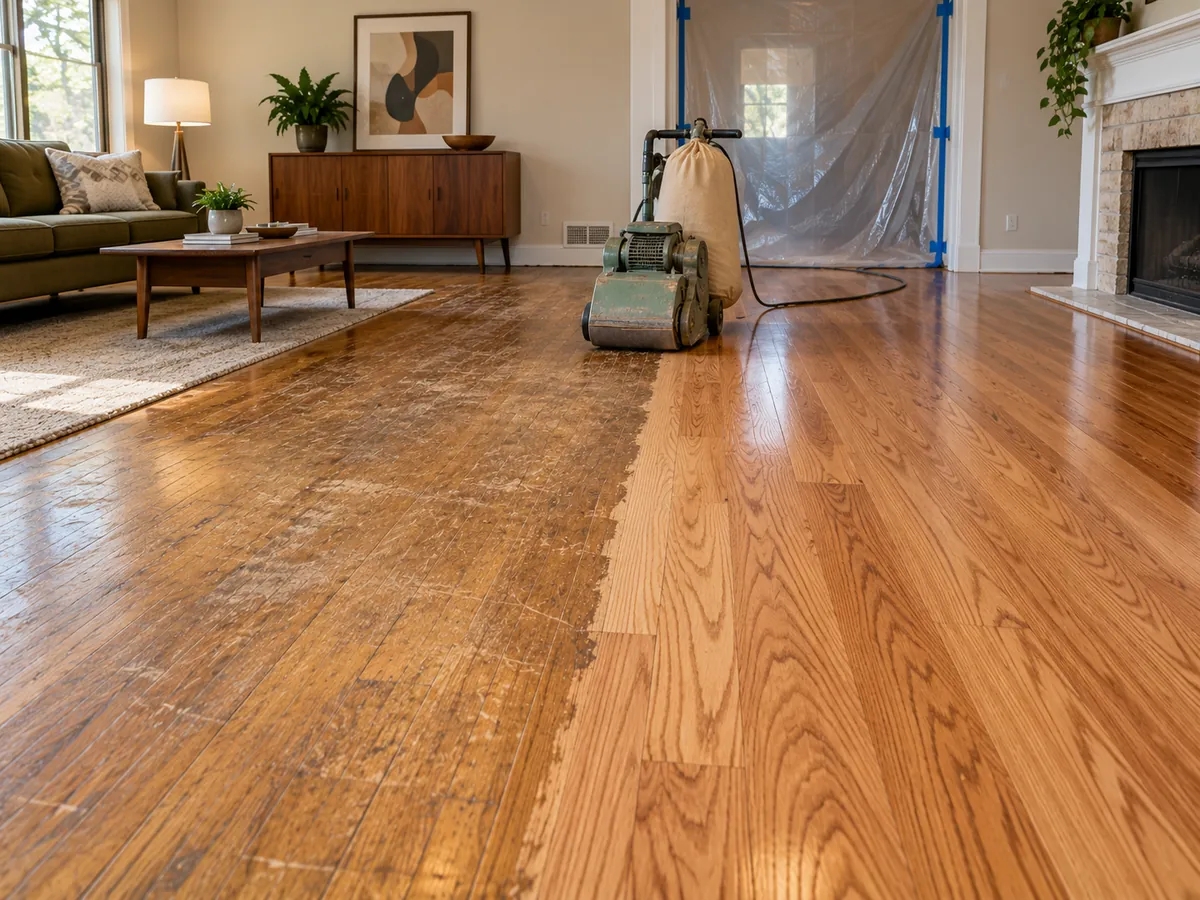
Freshly sanded and refinished red oak hardwood floor in an older Arlington, TX home

Hardwood floor refinishing in Arlington, TX starts with checking how much wood is left to sand. Solid hardwood is usually 3/4 inch thick and can be refinished several times over its life, but each full sanding takes off roughly 1/32 inch, and a floor that has been sanded before has less left to give.

Some of the best floors in Arlington have been hidden for decades. Mid-century homes near downtown, around UTA and in Pantego may have original oak under the carpet, and older houses in Hurst and Bedford can hide the same thing. Other jobs are newer floors with gray traffic lanes, pet scratches or a stain color the owner has grown tired of. Each one gets a written assessment of what can be sanded, which boards need repair first and which finish fits the house.

What's Included in Hardwood Floor Refinishing

A full sand and refinish from us covers:

  • Floor assessment. We check board thickness at a vent or threshold, look for exposed nails or tongues, and test whether the old finish is polyurethane or wax.
  • Room prep. Doorways are sealed with plastic, vents covered and shoe molding pulled where it would block the edger.
  • Repairs before sanding. Loose boards are refastened, and pet-stained or split boards are cut out and replaced (see floor repair).
  • Sanding in stages from coarse to fine grit with the main sander and edger, plus hand scraping in corners and along cabinets.
  • Dust control with sanders connected to dust collection and a full vacuum before any finish goes down.
  • Stain samples brushed onto your own sanded boards, so you approve the color in your own light.
  • Sealer and topcoats in the finish system you choose, with light abrasion between coats for adhesion.
  • Trim reinstalled and written care and cure-time instructions left with you.

Signs Your Floors Need Refinishing, Not Replacement

Refinishing is usually the right fix when the damage is in the finish or the top layer of wood:

  • Gray, dull traffic lanes where the finish has worn through and bare wood is starting to darken.
  • Surface scratches and claw marks that have not gone deep into the wood.
  • An old finish that has turned orange or yellow, common with aged oil-based polyurethane.
  • Carpet coming up to reveal oak that has been covered for years.
  • A color change, such as moving from a honey tone to a natural or brown stain.

If the finish is dull but no bare wood shows, a screen and recoat may be enough. Refinishing will not fix an active moisture problem: boards that are still cupped, soft or black-stained need the cause and the boards dealt with first. For an entirely new floor, see hardwood floor installation.

Our Refinishing Process in Arlington Homes

  1. Assess. We gauge the remaining wood, identify the species and old finish, and recommend either a screen and recoat or a full sanding.
  2. Prepare the rooms. Plastic goes up at doorways, vents are covered for sanding, and any nails sitting proud are set below the surface.
  3. Repair. Damaged boards are replaced and wide gaps addressed before sanding, so new and old wood sand flat together.
  4. Sand. We step through progressively finer grits, then hand-scrape the corners. Red and white oak sand the same way but take stain differently, which is why samples come next.
  5. Stain and seal. Once you approve a sample, we stain or leave the wood natural, then apply a sealer suited to the topcoat.
  6. Topcoat and cure. We apply the finish coats and leave written guidance on when to walk on the floor, when furniture can return and when rugs can go back down.

Refinishing Options: Method and Finish Type

There are two decisions: how deep to go, and which finish goes on top.

MethodWhat happensWhen it fits
Screen and recoatThe old finish is buffed with a fine screen or pad, then fresh coats go on. No bare wood is exposed.Finish is dull or lightly scratched, but the wood itself is not worn or stained
Full sand and refinishThe floor is sanded to bare wood, removing roughly 1/32 inch, then stained or left natural and coated.Worn-through lanes, deep scratches, a color change or floors uncovered from under carpet
FinishLookDrying and upkeep
Water-based polyurethaneStays clear with little ambering; lower VOCDries fast, so more coats fit in a day; good for natural and light tones
Oil-modified polyurethaneWarm amber tone that deepens with ageLonger drying and cure time and a stronger odor while it is applied
Hardwax oilMatte, low-sheen look that soaks into the woodWorn spots can be touched up without redoing the room; needs periodic maintenance coats

Refinishing does not change how hard the wood is. Red oak rates 1,290 lbf on the Janka scale and white oak 1,360 lbf, so a fresh finish resists scuffs in the coating, but a dropped pan will still dent either one.

What Affects the Cost of Refinishing

Your written quote is built from these factors:

  • Screen and recoat or full sanding. A recoat skips the sanding days and costs much less.
  • Square footage and layout. Closets, halls and small rooms take more edging per foot than open rooms.
  • Condition of the wood. Heavy finish buildup, paint drips, carpet staples and old glue add sanding time.
  • Board repairs for pet stains, water marks or patched-in floor vents.
  • Stain or natural. Stain adds a step and drying time; water-popping the grain for darker colors adds another.
  • Finish system and coat count. Two-component water-based finishes cost more than single-component products.
  • Stairs. Treads and risers are sanded largely by hand; worn-out treads may be better replaced (see stair flooring installation).
  • Carpet removal when we are uncovering the floor (see old flooring removal).

We price after the assessment, since the condition of the wood is hard to judge from a phone call.

Refinishing Older Arlington Floors Through the Seasons

Pull up the carpet in a 1950s or 1960s house near downtown Arlington, UTA or Pantego and you may find oak strip flooring with tack strip holes around the edges and paint overspray along the walls. The holes get filled and the overspray sands out. Weather matters once the finish goes down. In summer, air conditioning dries indoor air enough that water-based coats can set before they level, so we finish in smaller sections and keep a wet edge. On a humid spring day the same finish can take noticeably longer between coats, so we keep windows shut, run the A/C and plan extra time in the schedule.

Why choose us

Why Arlington Homeowners Choose Us for Refinishing

1/32 in.

removed by a typical full sanding

We Check the Wood Before We Sand

A floor can only be sanded so many times. Before quoting, we look at board thickness where a vent or threshold shows the edge, check for nail heads or tongues showing through, and look for signs of earlier sandings. Since a full sanding removes roughly 1/32 inch, a floor with little wood left above the tongue may be better served by a screen and recoat. We tell you which one your floor can safely take.

3/4 in.

typical solid hardwood thickness

Repairs Woven In Before Sanding

Pet stains, water marks and old floor-vent patches stand out on a freshly finished floor. Most solid floors are about 3/4 inch thick, so we cut out damaged boards and weave in solid stock matched to the original species and width, staggering the joints so the repair follows the existing pattern instead of forming a square patch. The new boards are sanded and finished with the rest of the room, so they blend far better than a later patch.

3

finish systems, matched to how you live

A Finish Chosen for Your House

Water-based polyurethane stays clear and dries fast with lower VOCs. Oil-modified polyurethane gives oak a warm amber tone but takes longer to cure. Hardwax oil leaves a matte look and lets you touch up a worn spot without refinishing the whole room. We explain the tradeoffs in odor, color, drying time and upkeep, and help you pick the one that suits your kids, pets and schedule.

Free estimate

Get a Free Hardwood Floor Refinishing Estimate This Week

One call books your in-home measure, and you get a written, itemized quote after the visit.

(817) 555-0123

Mon to Fri 7 AM to 6 PM · Saturday 8 AM to 2 PM · Financing available

Our job-site standards

What Every Arlington Flooring Job Includes

No surprises on install day. These standards apply to every room we touch, from a single bathroom to a whole house.

  • Moisture readings, written down

    We test concrete slabs and wood subfloors before installation and record the numbers on your job sheet.

  • Flatness checked to spec

    We check the floor with a long straightedge and fix humps and dips to the flooring maker's tolerance.

  • Itemized, written quote

    Material, underlayment, prep, removal, trim and labor are listed line by line, so you can compare bids.

  • Protected home

    Floor protection on walkways, plastic dust barriers where we cut or sand, and doorways kept clear.

  • Clean job site daily

    Debris hauled out, tools stacked, and rooms left usable at the end of each workday.

  • Final walkthrough

    We walk every room with you, fix anything you flag, and leave labeled spare boards or tile for future repairs.

FAQ

Hardwood Floor Refinishing FAQ

How long does hardwood floor refinishing take?

It depends on square footage, stain and finish type. Sanding and repairs come first, stain has to dry before sealing, and each topcoat needs drying time before the next. Water-based systems can often take more than one coat a day, while oil-modified finishes usually need longer between coats. Your quote includes a day-by-day schedule.

Can you sand out black pet stains?

Usually not. Dark stains from pet urine tend to soak deep into the wood, so sanding lightens them but rarely removes them. The reliable fix is replacing those boards before the floor is sanded, so the new wood is finished along with everything else. Light gray water marks sometimes sand out, and we test before recommending replacement.

Should I screen and recoat or fully refinish?

Screen and recoat when the finish is dull or lightly scratched but no bare wood is showing. Choose a full sand and refinish when traffic lanes have worn to gray wood, scratches go into the wood or you want a new color. A recoat will not bond over wax or some polish products, so we test the old finish first.

Do I have to leave the house while floors are refinished?

Not always with water-based finishes, though you will need to stay off the rooms being worked on and keep pets out. Oil-modified finishes have a stronger odor and a longer cure, so some families plan to stay elsewhere for a night or two. We seal doorways and control dust, but sanding is loud.

Will refinishing close the gaps between my boards?

Seasonal gaps that open in dry months and close in humid months are better left alone, because filler will crack or squeeze out as the wood moves. Wide, permanent gaps can be filled with wood slivers or filler during refinishing, or the boards relaid if they are severe. We look at the gaps before deciding.

Also serving

Hardwood Floor Refinishing in Nearby Cities

Ready to Start Your Hardwood Floor Refinishing Project?

Call for a free in-home estimate. We measure, test the subfloor and leave you a written quote.

Call (817) 555-0123

Mon to Fri 7 AM to 6 PM · Saturday 8 AM to 2 PM · Licensed & insured, Lic. #238190

Call Now Free Estimate
(817) 555-0123