Family-owned, licensed & insured. Free in-home estimates in Arlington and nearby cities. Call (817) 555-0123

Treads, risers and nosing

Stair Flooring Installation in Arlington, TX

Hardwood treads, LVP stairs with matching nosing and carpet-to-wood conversions for Arlington homes, with every riser measured before new material adds height.

  • Solid hardwood treads with painted or stained risers
  • LVP stairs with matching stair nose
  • Carpet-to-wood stair conversions
  • Free in-home measure and written quote

Family-owned · Licensed & insured, Lic. #238190 · Financing available

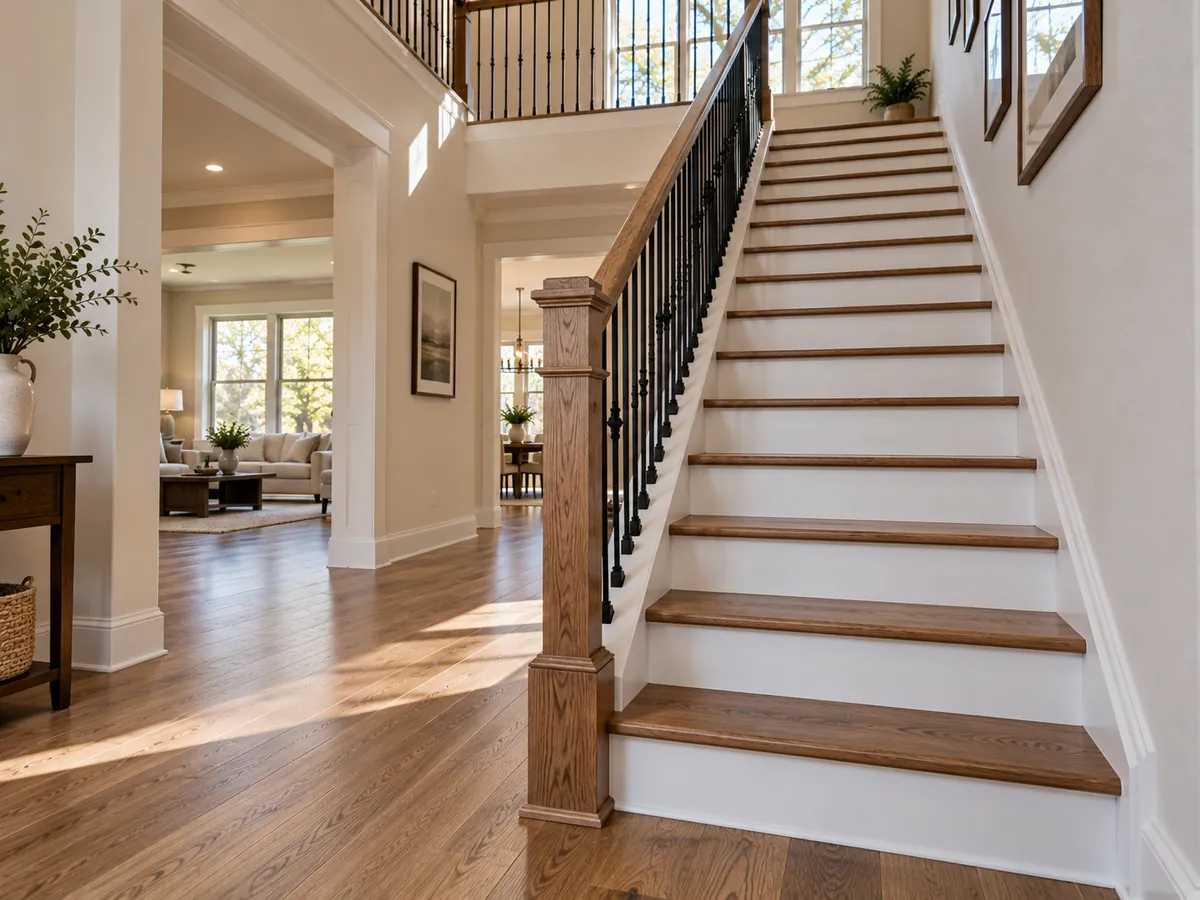
Carpeted staircase converted to oak treads and white risers in an Arlington, TX two-story home

Stair flooring installation in Arlington, TX is mostly about two-story homes where the builder ran carpet up the stairs, and the owners now want the steps to match a new wood or vinyl floor downstairs. Stairs take more labor per square foot than any other part of a flooring job, because every tread and riser is cut and fitted one at a time, and the finished steps still have to meet the residential code for rise and run.

We handle solid hardwood treads with new risers, luxury vinyl plank wrapped over the existing stair with a matching nosing, and carpet runners over finished wood. Before any of them, we measure each riser and tread, because adding material to a staircase changes the height of the first and last steps more than most people expect.

What's Included in Stair Flooring Installation

Each stair quote covers the following, listed so you can see where the labor goes:

  • Riser and tread measurements for every step, plus the floor heights at the top and bottom of the flight.
  • Carpet, pad and tack strip removal, with every staple pulled so the stair is clean to build on.
  • Bullnose trimming on builder stairs, cutting the rounded overhang flush with the riser so retrofit treads sit tight.
  • Treads and risers scribed to fit, since few stairs are perfectly square to the walls and skirt boards.
  • Construction adhesive and fasteners on every piece to keep the stair solid and quiet.
  • Nosing matched to the floor: solid wood, a flush or overlap stair nose for LVP, or a landing nose where the stair meets the upper floor.
  • Balusters pulled and reset where they sit in the treads, keeping your existing railing.
  • Stain, finish or paint on unfinished treads and risers, then cleanup.

Signs Your Stairs Are Ready for New Flooring

  • Matted or frayed carpet on the nosings, usually the first spot builder carpet wears out.
  • A new floor downstairs that now stops awkwardly at a carpeted bottom step.
  • Squeaky or loose treads you can hear from the next room.
  • Allergies or pets that make a hard surface easier to keep clean than carpet.
  • Oak treads with worn-through finish, which may only need sanding (see hardwood floor refinishing).

If the new floor downstairs is solid or engineered wood, we can order treads in the same species and finish them to match; our hardwood floor installation page covers the floor side of the project.

How We Redo Stairs in Arlington Two-Story Homes

  1. Measure every step. We record each riser height and tread depth, then work out what the new tread thickness does to the first and last risers.
  2. Plan the floor heights. If new flooring is going in downstairs or on the landing, its thickness goes into the math so the riser heights stay even.
  3. Strip and prep. Carpet, pad, tack strip and staples come out, bullnose overhangs are cut flush, and loose treads are screwed down to the stringers.
  4. Cut and fit. Treads and risers are scribed to the walls, set in construction adhesive and fastened. Treads on an open side get a returned nosing so no end grain shows.
  5. Finish. Unfinished treads are stained and coated to match the floor; risers are painted or stained, and small trim covers the joint under each nosing.
  6. Walk it. We check every step for movement, sound and a consistent nosing line before we leave.

Stair Options: Hardwood, LVP or Carpet Runner

Most Arlington stair projects end up as one of these three. The right one usually depends on the floor at the bottom of the stairs.

OptionHow it is builtFeel and upkeepBest fit
Solid hardwood treadsRetrofit or full replacement oak treads, with paint-grade or matching wood risersSolid underfoot and can be sanded later; slicker in socksHomes with hardwood or engineered floors nearby
LVP with matching nosingPlanks glued to each tread and riser, with a stair nose made for that product lineWater resistant and quiet; worn nosing is replaced, not refinishedHomes with new luxury vinyl downstairs
Carpet runnerA strip of carpet over wood treads, leaving wood exposed at both sidesSofter, quieter and better traction; needs regular vacuuming and eventual replacementHouseholds that want the wood look with more grip

LVP on stairs is glued down, not floated, so it cannot shift under a heel. If you are putting vinyl in downstairs, see luxury vinyl plank installation for choosing a product line that offers a matching nose. Runners are installed by our carpet installation crew after the wood treads are finished.

What Affects the Cost of Stair Flooring

Stairs are priced per staircase, not per square foot, with these factors called out:

  • Number of steps, landings and winders. Pie-shaped winder treads take far longer than straight steps.
  • Open or closed sides. Open-sided treads need returned nosing on the exposed ends.
  • Retrofit or full replacement. Retrofit treads cap the trimmed existing stair; full replacement removes the old treads.
  • Material. Species and grade for wood treads, or the product line and matching nosing for LVP.
  • Risers. Paint-grade risers cost less than stain-grade hardwood.
  • Balusters set into each tread that have to be removed and reset.
  • Site finishing to match an existing floor color, versus prefinished treads.
  • Carpet removal and repairs found once the carpet is up (see old flooring removal).

Builder Stairs in Southwest Arlington, Mansfield and Viridian

Plenty of two-story homes in Southwest Arlington, Mansfield and Viridian were finished with builder carpet on the stairs, and under it there are often plain treads with a rounded bullnose, built to be covered. Converting them is common, but the height math is easy to miss. Under IRC R311.7.5, the tallest and shortest risers in a flight cannot differ by more than 3/8 inch. Cap each step with a new tread while the downstairs floor stays put, and the bottom riser grows by the full tread thickness while the top one shrinks. We plan tread thickness and floor heights together so every step stays inside the rule.

Why choose us

Why Arlington Homeowners Choose Us for Stairs

3/8 in.

max riser variation in a flight (IRC)

Every Riser Measured First

Adding a tread cap to every step leaves the middle risers unchanged, but it raises the bottom riser and shortens the top one unless the floors above and below change too. The code allows no more than 3/8 inch between the tallest and shortest riser in a flight. We measure all of them, add in the thickness of any new floor going in, and choose tread thickness so the finished stair stays within that limit.

7-3/4 in.

maximum riser height (IRC R311.7.5)

Treads Fit to the Stair You Have

Builder stairs are rarely perfectly square, and some already have risers close to the 7-3/4 inch maximum, which leaves little room for extra height at the bottom step. We scribe each tread to the walls, choose retrofit treads or full replacement based on the existing structure, and glue and fasten every piece so it stays quiet. Where your stair cannot take added thickness, we tell you before any material is ordered.

CRI 105

residential carpet installation standard

Runners Installed Tight and Straight

A runner over new wood treads keeps the wood look while adding traction and cutting noise. We install runners to the Carpet and Rug Institute's CRI 105 residential standard, with the carpet pulled tight into each joint between tread and riser and the borders measured so the exposed wood is even on both sides of every step. Each step is secured on its own, so the runner does not creep or bunch over time.

Free estimate

Get a Free Stair Flooring Installation Estimate This Week

One call books your in-home measure, and you get a written, itemized quote after the visit.

(817) 555-0123

Mon to Fri 7 AM to 6 PM · Saturday 8 AM to 2 PM · Financing available

Our job-site standards

What Every Arlington Flooring Job Includes

No surprises on install day. These standards apply to every room we touch, from a single bathroom to a whole house.

  • Moisture readings, written down

    We test concrete slabs and wood subfloors before installation and record the numbers on your job sheet.

  • Flatness checked to spec

    We check the floor with a long straightedge and fix humps and dips to the flooring maker's tolerance.

  • Itemized, written quote

    Material, underlayment, prep, removal, trim and labor are listed line by line, so you can compare bids.

  • Protected home

    Floor protection on walkways, plastic dust barriers where we cut or sand, and doorways kept clear.

  • Clean job site daily

    Debris hauled out, tools stacked, and rooms left usable at the end of each workday.

  • Final walkthrough

    We walk every room with you, fix anything you flag, and leave labeled spare boards or tile for future repairs.

FAQ

Stair Flooring Installation FAQ

Can you put hardwood over my carpeted builder stairs?

Yes, in most cases. After the carpet, pad and tack strip come off, we cut the rounded bullnose flush with each riser and install retrofit treads and new risers over the existing stair. If the original treads are damaged or the heights will not work, we replace the treads fully instead.

Can LVP be installed on stairs?

Yes. On stairs, LVP is glued to each tread and riser rather than floated, and most product lines offer a matching stair nose that covers the front edge of each tread. The result matches an LVP floor exactly and resists spills, though worn nosing pieces are replaced rather than refinished.

Do stair code rules apply when I replace carpet with wood?

IRC R311.7.5 sets the limits: risers no taller than 7-3/4 inches, treads at least 10 inches deep and no more than 3/8 inch of variation within a flight. Even when a flooring job does not involve an inspection, staying inside those numbers is what keeps people from catching a toe on the first or last step.

Do the stairs have to match my floor exactly?

No. Many homeowners pair stained treads that match the floor with white painted risers, which makes each step easier to see and hides scuffs differently. Prefinished treads seldom match a site-finished floor perfectly, so for a close color match we finish the treads on site along with the floor.

Are hardwood stairs slippery?

Finished hardwood is slicker than carpet, especially in socks. A satin or matte finish helps a little, and a carpet runner helps a lot. Some homeowners add a runner to the stairs while keeping bare wood on the landing, which keeps the wood look and adds grip where it counts.

Ready to Start Your Stair Flooring Installation Project?

Call for a free in-home estimate. We measure, test the subfloor and leave you a written quote.

Call (817) 555-0123

Mon to Fri 7 AM to 6 PM · Saturday 8 AM to 2 PM · Licensed & insured, Lic. #238190

Call Now Free Estimate
(817) 555-0123