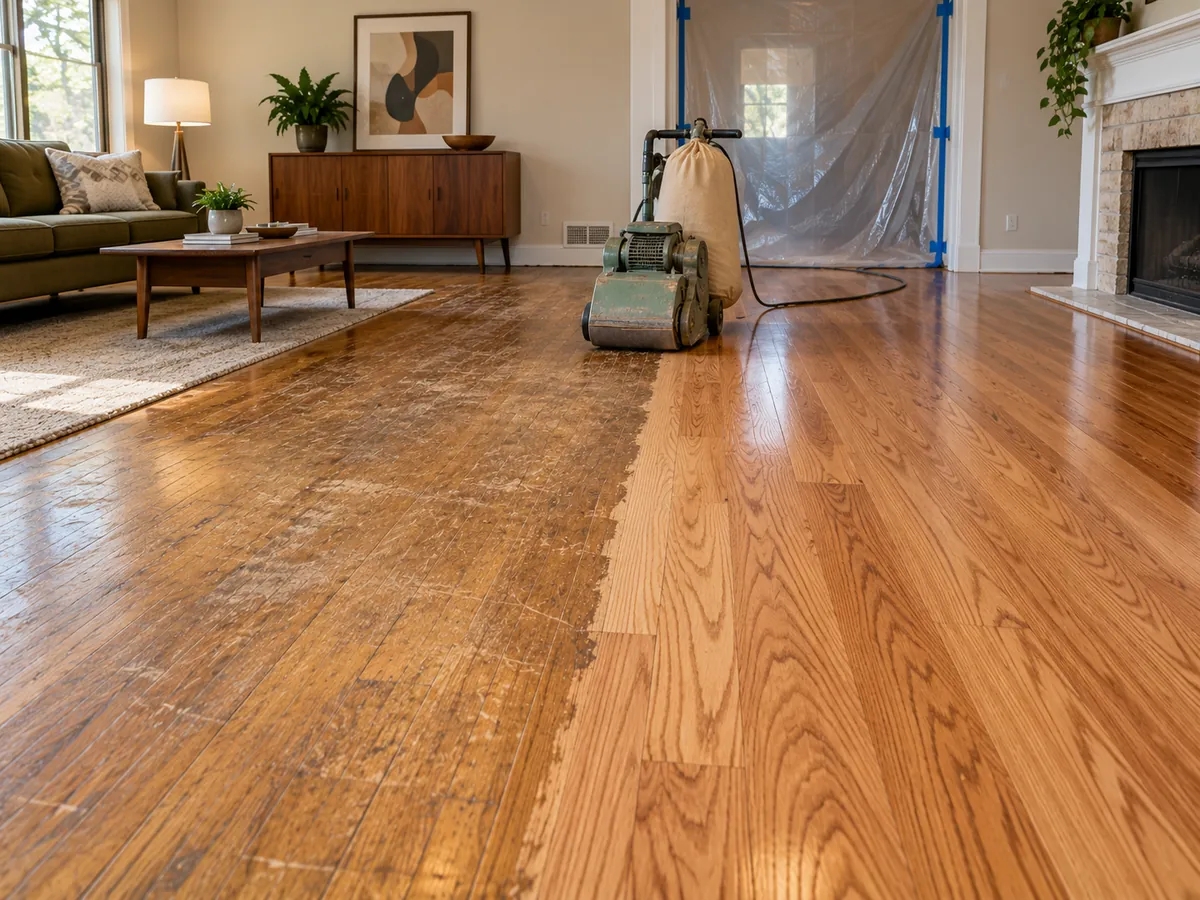
Refinishing Oak From Hurst's 1950s and 1960s Boom
Hurst grew fast once a helicopter manufacturer moved its operations to the city's southeastern edge in 1951. The town incorporated the next year with about 2,700 residents, reached an estimated 8,500 by 1958 and counted 27,215 people in the 1970 Census (City of Hurst; Texas State Historical Association). Census estimates show about 6,200 of today's homes were built in the 1950s and 1960s, more than a third of all housing in the city. Those are the houses where oak most often hides under carpet.
When the carpet comes up, expect a ring of tack strip holes and staples along the walls, paint overspray at the baseboards and sometimes dark spots where a pet bowl or a plant stand sat for years. The holes get filled and the overspray sands away. What decides the plan is how much wood remains above the tongue. A floor close to seventy years old may already have been sanded two or three times, and once the tongue starts to show, a screen and recoat or replacement boards are the safer route. We check at a floor vent or threshold before quoting, and we tell you which result your floor can realistically reach.